
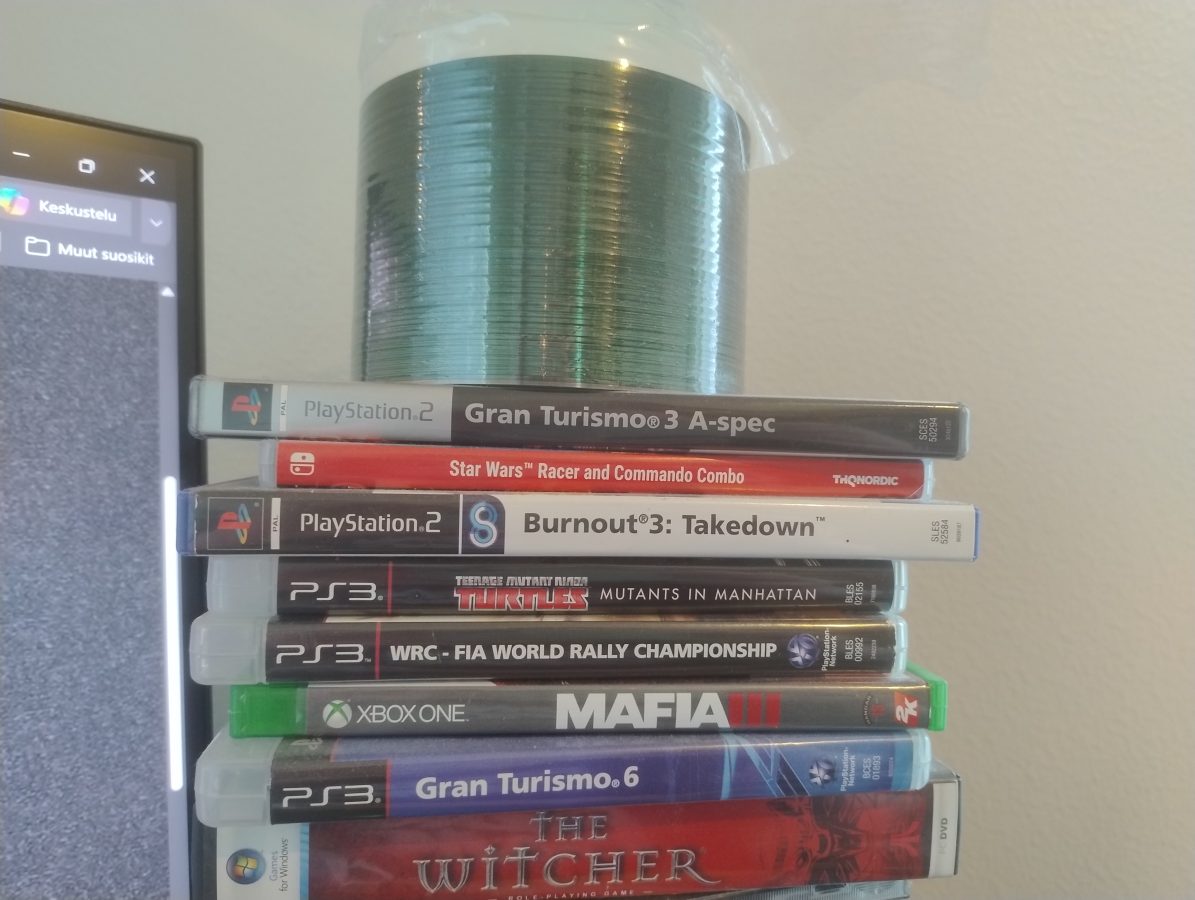
Physical game cartridges and later discs (CDs, DVDs and so on) was how games were sold way before video games were available as downloads from internet. Internet came to be during 1990s and it was only in 2000s when game consoles started to be connected to it. First there were consoles like PS2 and Xbox that could be connected to internet. Later it came a norm that discs only held parts of the game and you actually had to download some parts of the game. This is also how many games were patched or updated even after they had been released.
The progress towards faster networks and downloading games has been a slow one. However just some days ago Sony announced that it will discontinue physical game discs in the year 2028. This makes a gamer think about the release of PlayStation 6 and the matter that it probably won’t have a disc drive at all. We have seen this kind of progression already in PCs. Steam and other software web shops have provided us the games that we play today and this has been the norm for already several years. You can buy yourself an internal or external DVD or Bluray drive for your PC and this can make you some trouble and you have to pay for it.
If we go from the beginning to end and inspect how have games been delivered to customers through times beginning from 1980s when Nintendo, or NES, was first released. Now, Nintendo wasn’t the first home console but it was the most successful console in the 1980s with some competition from Sega’s consoles. Back then games were delivered as electronic cartridges that you actually inserted into your video game console. The space that a game like this takes is only some tens or hundreds of kilobytes.
After cartridges we moved forward as the technology progressed to compact discs. First we saw CD-ROMs that could hold maybe 700 megabytes of information. So, the amount of information was 700 000 kilobytes when NES could onyl deal with games of maybe 100 kilobytes. So, the amount of data became 7000 times bigger when games began to be delivered as CD-ROMs. Later the technology progressed and we moved to first DVDs and then to Blurays and later to 4K discs. So, now Sony announced that the progression of discs is going to end in 2028.
It is very easy to rip PlayStation 1 and 2 games. You only need a regular CD-/DVD-drive. I am myself using an external one. I do buy physical game discs for both of these systems. I just want to always rip the game disc from the media I have purchased so I am not limited to use only the physical disc. This way I can play the game on a PC and on an emulator. So I mainly use emulation for PlayStation 1 and 2 retro gaming. I do have in my setup a PS1. I mainly use it for some games that have multiple discs so the swapping of discs is smoother. It might be possible to use emulation also with multi-disc games but to today I haven’t found a way to solve this matter.
So, actually the game disc can and maybe even should be ripped to a digital format. When you rip the disc it becomes an image of the disc that you can burn to a disc or utilize it to play the game that it holds. It takes only about 15 minutes for my computer to rip the disc and then I am moving the image to the PC that has Batocera as its operating system that is connected to my home’s network. That way the disc isn’t required but it is a sign that you actually do own the game and it is not just downloaded from internet as a pirated copy.
Is it pirating if you just copy a game that you don’t own? I think it can be considered as something like that. Now when games might become fully digital the matter of who actually owns a game is becoming more unclear. Actually instead of huge shelves in our homes that hold some game discs and cartridges should now become digital libraries of games that you can install and uninstall. But what happens if the system that holds this digital library becomes somehow unavailable? The matter that you own a physical copy of a game makes sure that you do own it even if some web service game library platform becomes obsolete. And this seems to be the biggest part of the debate that has already been risen. Here were my thoughts about this matter. I think it is now time to stop and think about this a bit. Maybe I form some opinion about this later. You, my dear reader, can also think about this and maybe have a conversation with some gamer like you.
