Let’s do some math…

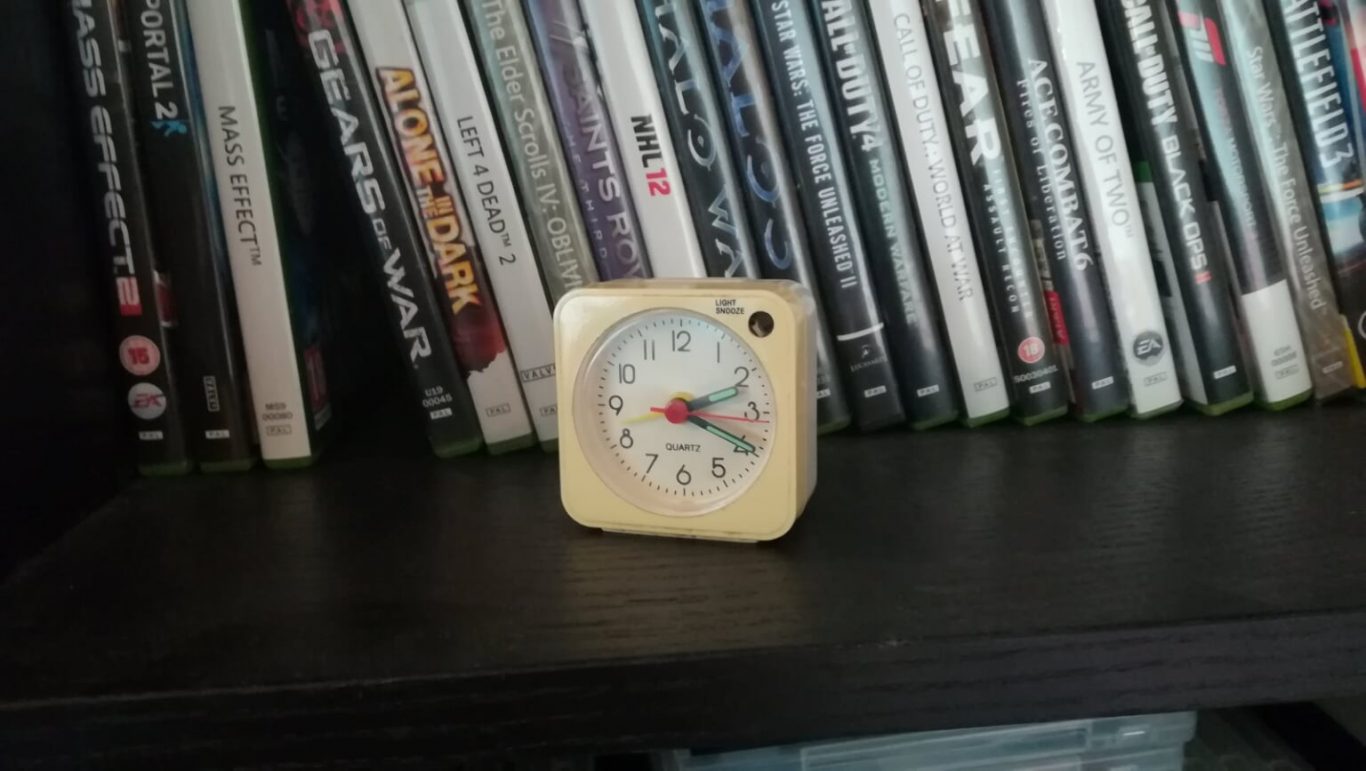
Playing can be very time consuming. I started wondering how many hours have I actually spent playing. How much of my time, or even my life, I have spent enjoying video games. Would it be months? Or years? Why don’t we do some calculations on this.

How many hours is there in a month? One month has 30 days which have 24 hours each. So there is 720 hours in one month. One year has 365 times 24 hours. That means one year has 8760 hours. We can approach this problem by thinking how many games have you completed so we can calculate an approximation of how many months or even years you, the player, has spent playing.

To complete a modern role playing game would require maybe 100 hours. For a shorter action game it would mean that it takes about 15 hours to complete. These games are much shorter than RPGs. Driving games would take propably about 15 hours also. Games like Fallout 4, Final Fantasy series’s games and other games like this take a bit longer to complete.

I think we shouldn’t try to calculate precisely the amount of hours but we can figure out an estimation. In one full month I would play Final Fantasy VII about seven times through. That’s a whole lot of playing. In one year I could play again Final Fantasy VII thorugh over 85 times. This would be a ridiculous amount of time to spend playing.

So the time I have spent playing, in my lifetime, might be somewhere between maybe months or even one year. But I don’t think many gamers come close to maybe two or three years. So these calculations can give you an idea of how much of your time you have actually spent playing in total. There however are much more boring and not so improving things you can spend your time. Playing games is a big part of my life. But you got to remember that there are more important things in life also…

Going Digital

They say that nowadays most PC games are sold as digital copies. I buy latest games today for PS4 and I am not so keen on latest PC games. I had to face this problem as I was planning to buy a laptop computer back in this years July. I assumed that my new laptop would have an optical drive of some kind. At least I was hoping it would have one. Finally it didn’t.

I have a large, well okay, huge, collection of games as physical copies. This includes lots of PC games. I find my retro kinds of games mainly from flee markets or from game shops bargain sales. I know there is these kinds of shops on the internet that you can buy a huge collection of games and they can be old, new, classic or not so known. I know there are lots of people doing this. This could be a way for me too to collect and buy games.

So this issue was current when I had a new, fresh, laptop computer, that had latest Windows operating system on it. But there were no games. There were no software applications. If I wanted to play something I would have to install it from somewhere. And I didn’t have an opportunity, this time, to install from CD-ROM or DVD. I actually went and spent (nice rhyming there) about 45 euros for an external DVD drive, but lets explain my next point first…

The way I remember Steam was mainly as irritating obstacle for me as I was trying to install a game to my own PC. It didn’t allow me to install a game that was registered by another user. I have bought all-in-all about ten games from flee market that I wasn’t able to install or eventually play. And I blamed Steam for it. I became more cautious. If a game had “Steam” on its back side I didn’t buy the used game. This was my view.

As I installed and activated Steam on my new computer I suddenly noticed that Steam enabled me to import all the games that were synchronized to my Steam account. I mean I was able to play any game that I had bought and that were supporting Steam. That’s very good. I think that’s amazing! I don’t have to depend on the physical copy of a game. I can pay for it and register so I can play it on any PC. I say this once more – this is very nice.

Are we going to see more this kind of movement towards digital markets when we are talking about purchasing latest games for latest gaming consoles and computer? The time will tell. I might not be ready for my PlayStation to be only digital but maybe I will buy someday in the future a PC that doesn’t have an optical drive.

History Of Optical Drive (inside gaming)

Optical drives have existed in gaming consoles for tens of years. The technology existed way before it was used in mainstream game devices. Back in the 90s there were several consoles that were equipped with optical disc drive. One of the earliest was the expansion to Segas Mega Drive called Mega-CD.

As Compact Disc technology gained ground there was a strong change coming in the form of 3D technology. Sega maybe was one the firsts to make use of new technology but it made a slight mistake. It didn’t have a gaming console capable to produce 3D models and/or graphics. Later Sony made its entry to gaming business with PlayStation and claimed its spot as the developer of the most popular gaming system.

During this period there were several devices released from Philips, Atari and Panasonic just to name a few. The competition was tough. We can compare the amount of data that game cartridges had to what was possible through CD technology. An average CD-R disc holds 700 MB. Nintendo 64s cartridges hold only about 35 MB. This meant that there was 20 times more space for any game to be developed.

First CD-ROM made its way and later came DVDs in the form of Sonys PlayStation 2. This was back in the beginning of 2000s. DVDs offer about 4,7 GB of space. This format was followed by Blurays that hold data from 25 GB up to 100 GB depending on which technology it uses or to say more precisely how many layers the disc has. Blurays are used in the latest generation of gaming consoles but this is about to change as PS5 and Xbox Series X are making their way to the markets later this year.

Todays games can take up so much space that you have to download a large update during the installation of the game. As speeds of internet connections keep developing it is today possible to produce gaming consoles and computers that don’t have, or don’t need to have, any optical drives. This gives the consumer an ability to just pay the game and install it directly to the hard drive. Of course this makes it easier to manage game collections but maybe something is lost as there is no physical material to collect or showcase. All in all digital gaming makes manufacturing gaming devices cheaper and it also shows this way to the consumer. PS5 will be released as all-digital version and a version that has an optical drive just to mention an example.