The Use of Memory in Game Consoles

Today’s topic for this blog is the use of memory. I decided to write about the use of memory in game consoles. We are dealing with things like memory cards, hard disks and random access memory. I also tell you a bit about processors and how computers deal with the actual ways in which the player interacts with the game.

This is not a science writing but more like something that I wanted to briefly write to you since I happen to have some experience in playing these video games and I also have this background in studying and working with computers. I have been playing games a lot. I have read a book or two about the use of memory and also studied a lot about this subject.

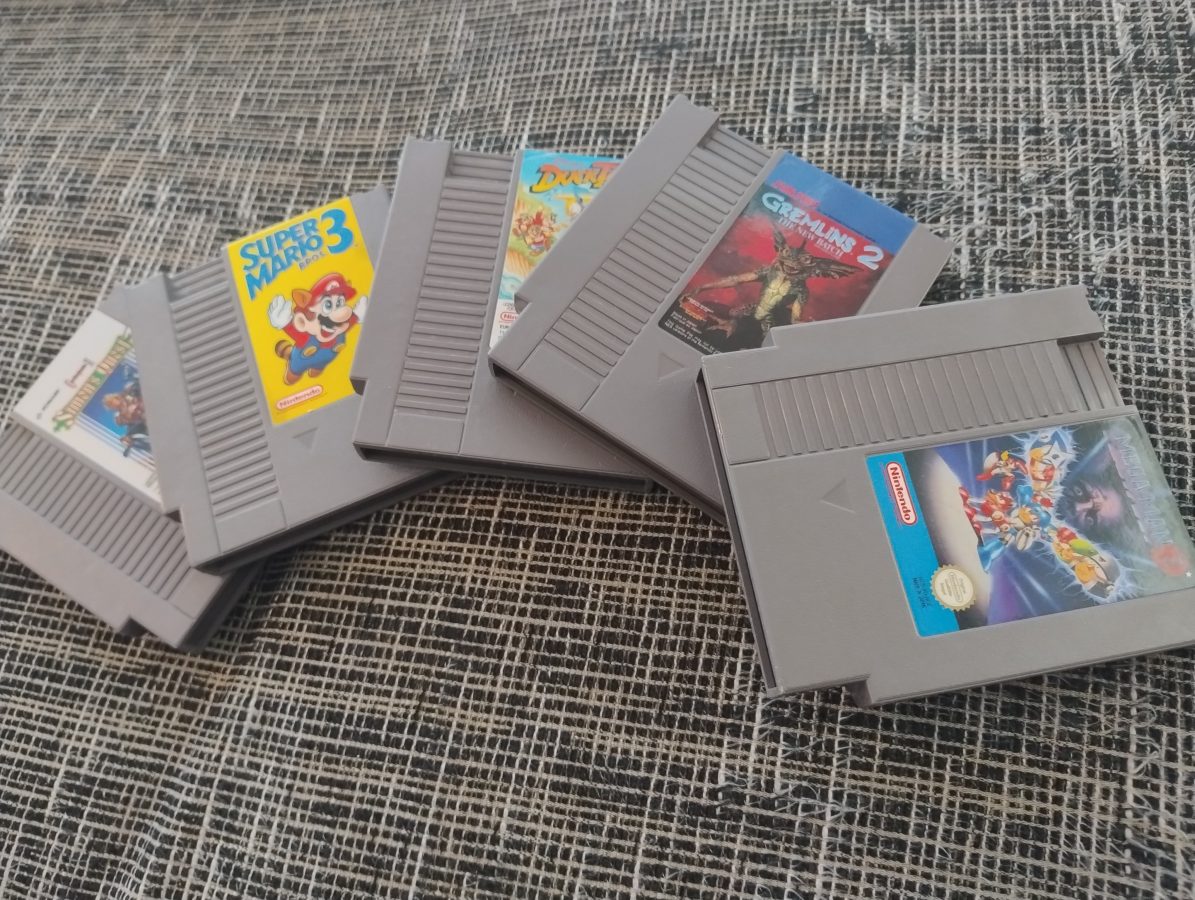
What really made a difference in the use of memory for video game consoles was the introduction of the optical drive. You did have a space for couple, maybe four, megabytes for your game. Well, like you might know, a CD-ROM disc has somewhat a space of 650 MB. So the amount of space was more than 100 times larger.

What about saved games? A supported disk drive was introduced with the release of the original Xbox. It might be the first game console to have a hard drive. Before this we had to use memory cards for storing and also organizing our saved games. Hard disks also allowed many other things. It also made installing games to the hard drive a norm.

I am trying to explain the difference between temporary memory (like RAM in the world of computers) and staying memory (HDD and/or SSD drives). So basically RAM, or Random Access Memory is something that the system uses while it is powered. After the power is cut off the memory disappears. In programming you use different variables to store the data temporarily.

Hard drives can save data that is included in these variables so that it can be accessed also later on. Earlier there were typically HDD drives used which offer a lot of space but they are much slower in processing the data than newer and more expensive SSD hard disks. The data in a SSD or HDD can be saved in different forms. Sometimes the programmers can use text files and sometimes forms like JSON. Data can also be serialized in a way. There are many possibilities. Basically you are saving something to some file or files. Sometimes there is also some sort of database used.

The data moves between the components of your gaming device through different kinds of busses. You can probably read more about electronics from your favorite search engine or maybe you can create a prompt for AI. I am not going to try to expain this so thoroughly at the moment. But if you are interested you can find more about this.

How does the gaming console work basically? There is a loop in the program code that keeps refreshing the screen. The frequency is blondly called FPS. It stands for Frames Per Second. This can be for example 60. The system reads all values of variables that are in the code and updates everything regarding to the values that the variables hold.

The game system detects any interactions using the code. The game detecs what controllers buttons are pressed and for how long. Then the screen keeps updating. There’s a lot of things happening. The main source for the things that are happenig is the actual source code of the game. You might think that it is easy to read a source code but it actually is pretty. It is way harder than reading something that a blogger has written to a blog post. And only the person that has written the code might fully understand it. Sometimes even this is not possible. The code can and is actually preferred to have comments in it also.

So to summarize this blog post we can conclude that memory is used in many ways in game consoles. Data is saved and handled. We have come a long way from game consoles like Sega Mega Drive in which you aren’t able to save at all (you do if you have a battery inside the game cartridge) to modern consoles in which you have huge SSD drives of several tera bytes of space for lot more content than just your saved game data. I encourage you to find more information if you are deeply motivated in learning more about this very interesting topic.

Itchy, Tasty – The Book About Resident Evil

Itchy, Tasty is a book written by Alex Aniel. It tells the story of Resident Evil video game series that was developed by this huge game developer Capcom that became famous by releasing Street Fighter II for arcades and Super Nintendo. Street Fighter wasn’t their first game but it might have been the game that took Capcom to the top. The book has been published in 2021. It holds well over 250 pages and is focusing on the games that were released in the series before Resident Evil 5.

Resident Evil begun with a game titled Sweet Home that was a NES game. There were debates about releasing a horror game for such an childish and powerless gaming console. While there do exist many great games on Nintendo Entertainment System the developers at Capcom thought that it would be difficult to release a good horror game for this system because of its limitations. The music and graphics would have been too unimpressive to satisfy the vision they initially had about the new horror game that was about to be developed.

Itchy, Tasty describes how Resident Evil managed to create something completely original and new in video games. It can be held responsible for creating a new genre of survival horror. It took some elements, the weird and stationary camera angles, just to name one, from first games of Alone In The Dark series that was released some years before the first Resident Evil. You can probably figure how Resident Evil impacted on games like Silent Hill and any other survival horror game that has ever been released.

For me Resident Evil 2 was the first game in the series that I actually played. It wasn’t the first PlayStation 1 game I played. That honor goes to Gran Turismo. But that piece of survival horror really impressed me. Well, it made me also feel agony but in a somewhat desirable in a way. It is hard to describe this game to a person that hasn’t played it. I think about RE2 as a retro game. It was something impressive back in 1998.

Soon after, maybe some moths or something like that, I had beaten RE2 and wanted something more to play. So, I picked up the first Resident Evil. I soon found that it was also a very good game. I also completed the third game. As there were several spin offs that I haven’t got into I cannot say that I would have played every game in the series. I do have completed Resident Evil 5 but that is just out of the scope of Itchy, Tasty.

The author of Itchy, Tasty, Alex Aniel, is very much involved in the gaming scene. He writes firmly about the history and development of this series. Every game that was released before Resident Evil 5 is covered. Even a game for Game Boy Color has been mentioned. What I found as a very interesting piece of knowledge was the part of describing how the first game was ported to Nintendo 64. You know, it was originally developed for PS1. What is the main difference between these systems? Well, N64 used 64 MB game cartridges while PS1 had an optical disk drive that used CD-ROMS that had 650 MB of space.

This wasn’t the only difference between these systems. N64 was faster when it came to loading the data that game used. It is miraculous how it was actually possible to fit RE2 to a N64 cartridge. Later the series moved on to GameCube. For a while there was a decision in place that RE games would be developed only for Nintendo GameCube. As you might know already this wasn’t a long lasting decision as you can today find RE4 for PS2 also from your favorite gaming shop.

I can recommend this book especially for someone that is a fan of survival horror games. There are many interviews and a lot of background information that makes clear how the writer of the book has come to the writing of this material. Mainly persons that worked closely on the series have been included in these descriptions.


Double Life – Music for PlayStation

Double Life – Music for PlayStation is a music compilation CD featuring various artists. There is also a demo CD for PS1 included. It has demos of games: Ape Escape, Wip3out, Ridge Racer Type 4, Omega Boost, Anna Kournikova’s Smash Court Tennnis, Tomb Raider 3, Um Jammer Lammy and Crash Team Racing. So it has eight game demos.

This might not be the most meaningful find I have ever bought. Just something I got interested in while I was in the local flee market. It didn’t cost a lot. I think I got this for two euros. The CD plus PS1 demo disc have been released in 1999.

I do have a memory of seeing this compilation back in the days while visiting a record store. It might have been a super market. I really don’t remember so clearly.

The music featured on Double Life is the type of music you might hear while playing PS1. I didn’t like everyt track. Obviously I didn’t buy this thing for the music. I just thought it would be something I would like to own.

If you aren’t so familiar with PS1 demo discs like the one included in Double Life let me reminisce and also explain what they actually are. So, back in the 90s it wasn’t even possible to buy digital games. As PS1 was the most popular, maybe the best, gaming console out in the market there had to be some way for gamers to know what games were going to be released in the near future.

The promotion of new games was very much a responsibility of video game magazines. Well, there might have been some gaming websites already but my point here is that web wasn’t in the end  of the 90s what it is today. Today you can definitely download a game demo easily and watch the trailer online also.

PS1 demo discs were released to promote new and upcoming games. They had several demos of games. I remember clearly playing a demo of Resident Evil 2 before buying the game. You could test the game and play one demo for maybe 15 minutes or something. Just so much that you could make an opinion on if the game would be interesting and something that you would actually buy. There are several tens maybe even hundreds of these demo discs released.

So, just wanted to write a blog post once again. There haven’t been anything special happening in my life. I have played my video games and I have been, lately, reading a book about Resident Evil series’s history. I might write something about that book next in this blog. So, stay tuned for some more content.