Who Is This Guy (Super Mario)?

What’s the game you start to play when you want a nice platform game and you don’t mind if it is a bit retro? Of course you play Super Mario Bros or Super Mario Land or Super Mario Bros 3 or the New Super Mario. Whatever your choice is one thing is certain – there are lots of options here. That’s basically because there seems to be no limit to how many and how varying game titles have been released in this video game characters lifetime.

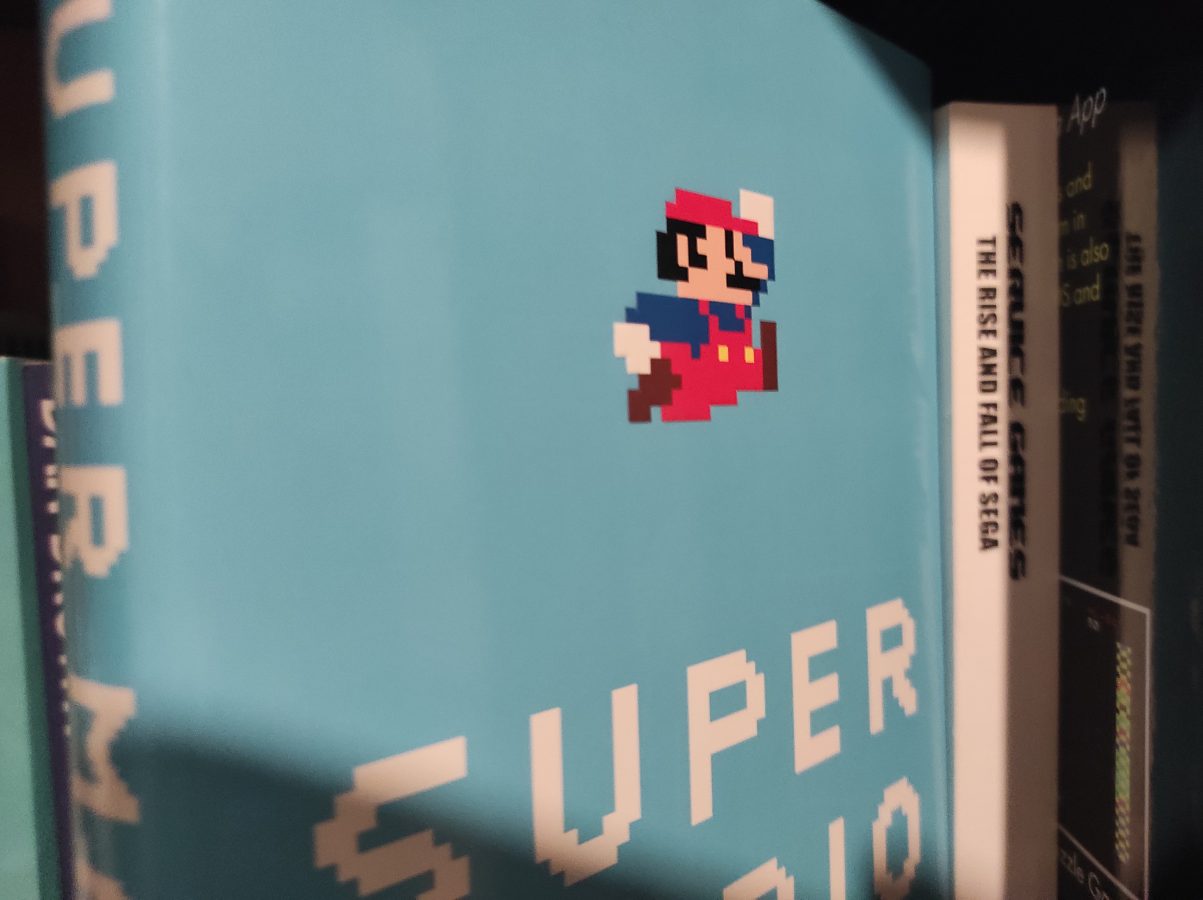
The featured image of this blog post is the cover of a book about how Nintendo and Mario “conquered” USA. Of course this character made its way into the minds of all gamer’s across the whole wide world. Super Mario was chosen to be the main character that represented the whole Nintendo as a company. There are lots of games and also some other material in which Super Mario has been used.

But who is this guy actually? We get to understand that he’s a plumber. He has a brother named Luigi. I think he’s a plumber too. Mario has the tendency to try to be a hero and he is always trying to save the princess. Mario is a bit softer than Sega’s mascot Sonic. Basically Mario is a product of the beginning of 80s while Sonic seems to be from the end of 80s and also from the beginning of 90s.

Of course all the real hardcore retro gamers know that Crash Bandicoot took the title of the most fascinating video game mascot back in the 90s. But you have to realize that Mario was the first of them. Nintendo was the brand that made gaming great again after Atari had effed up the whole game with it’s foolish strategy on releasing poor quality video games. Basically, back then, Atari just got too greedy.

And only Nintendo is able to come up with this kind of material. At the same time it seems a bit naive and childish but do you know what kinds of mushrooms he actually is able to consume? A mushroom that looks like Amanita Muscaria and makes him to grow. Wow! How did that happen and how did it happen so fast. Maybe there is something more to it than we at first can observe. Maybe parents should look after their children despite the fact that Nintendo seems to be so settled with its in game content.

Super Mario remains as a character that is a bit mysterious. You don’t get to talk with him in deep conversations. You might remember him from your childhood. Is he the one that is responsible for luring all these people in to video gaming? There haven’t been so many interviews or story lines in games that would have described his personality. Yet you definitely recognize his voice as he says “It’s me…Mario!”.

Why are things this way? Maybe it has everything to do with how under developed video games were. We had two dimensional pixel graphics and the audio quality was poor. There just weren’t enough space for this character to form some kind of a more progressed image in our minds. I think this is also a strength for him. He is kind of abstract figure. He was made to be simple and easy to approach. So Mario is at the same time very simple and also very attractive in a mind of a determined retro gamer.


Playing Game Boy Games (And Not Taking It Too Seriously)

This thing in this featured image is Super Game Boy. Can you guess what it can accomplish? Yes, to play Game Boy Games on Super Nintendo. So there’s an adapter and a Game Boy game which happens to be a good Game Boy game and it is…Super Mario Land.

Why and how did I start getting into Game Boy games? I just figured that there might be something interesting here. It all started as I played Zelda – Link’s Awakening. You know, that’s a Game Boy game and a good one, I can tell you that. So I started to get an idea out of this.

So, there are games being developed for some system. If you happen to be a game developer you have to take in consideration many things about on what device the game can be played on. Game Boy certainly has limitations but just look at these two games that I have mentioned here. They are of very good quality.

How limited is Game Boy as a gaming system? We can start from the screen resolution…or so called resolution. Game Boy actually has a resolution of 160×144 pixels with an aspect ratio of 10:9. That’s a small screen for a handheld gaming console. It’s actually so small that sometimes while I was testing Super Mario Land, just moments ago, I felt a bit of clumsiness because there just are so few pixels for controlling and actually moving your character.

What are some other limitations? There are only a limited amount of colors. Originally Game Boy had four shades of green on the screen. Where Game Boy really excels is the battery life. You can play 16 hours with four AA-batteries. To make a comparison Game Gear provided playing time of three to five hours with six AAA-batteries. Also Game Gear had a colour screen of 32 colors. What about sound? It is a bit limited. But you have to consider that this handheld gaming device came to markets in 1989.

Playing Game Boy games with Super Game Boy is fun. I have a total of five games for Game Boy at the moment. I also got myself a Game Boy Color some time ago. I am not so excited right now about it. Actually I found out that the screen was very dim and it makes playing it a bit of a pain. So I prefer my Super Game Boy adapter.

So I found some time today to spend with games and gaming. I am content that I also had time to write this blog post. I have been lately busy with work, reading books and making music.

The Book About Console Wars

In the beginning of 1980s there were lots of games and gaming systems available. All of the products targeted for home gamers just weren’t good enough. Some of them were actually garbage. It didn’t take long for consumers to understand what was going on. Remember that E.T. game that is called the worst video game ever? Well, that’s what we are talking about right here.

This however wasn’t the end of home gaming consoles. Nintendo released their Entertainment System in 1983. As they kept in mind all mistakes that earlier game consoles had made with too low quality in released games they were actually able to release a gaming system that was good enough for consumer markets. Gaming became popular again.

The demand for a home gaming console was still there. NES delivered a good quality 8-bit console. They didn’t have so much competition. This was about to change as Sega released their new 16-bit system in 1988. This is when the console wars started to take their form. And this is what the book “Console Wars” is all about.

So as you can figure I haven’t yet read this book all the way through. I have currently read maybe 150 pages of it. The book starts off with a funny foreword by Seth Rogen and Evan Goldberg. The book is actually written by Blake J. Harris and it was released in 2014.

As the book starts to describe how Sega entered the game with their 16-bit gaming console Sega Mega Drive it gives a view of what kind of a situation it was in the beginning of this console war. Of course Sega already had some experience of gaming markets as they had released Master System already. What really changed the scheme was the design of Sega’s own mascot Sonic The Hedgehog.

Sega got their idea for the icon of their gaming system through thinking about other cartoon figures and action hero’s of children and young human beings. There were several figures that influenced the shaping of Sonic. We can mention Turtles and Masters Of The Universe and even Barbie dolls. There is something also in these first 150 pages about Electronic Arts which had many very good quality sport games out there in the 1990s. Of course this gave its own influence in this console war.

Finally Nintendo answered and delivered for all of these gamers another even more powerful gaming console Super Nintendo. Of course there is also the battle between all these handheld consoles released. There were handhelds released by Nintendo (Game Boy), Sega (Game Gear) and Atari (Lynx). Game Boy finally became the most popular one of these three. It had some nice games and while Game Gear delivered a color screen their console battery life was way worse than Game Boy’s.

I find this book very interesting. I am glad that it is available for residents in my area (Finland). While it is written in English I still can understand it clearly. I find reading books written in English to work for my benefit. If you like to reminisce over some classic retro systems and are curious about how the actual history was written I can recommned this book for you.